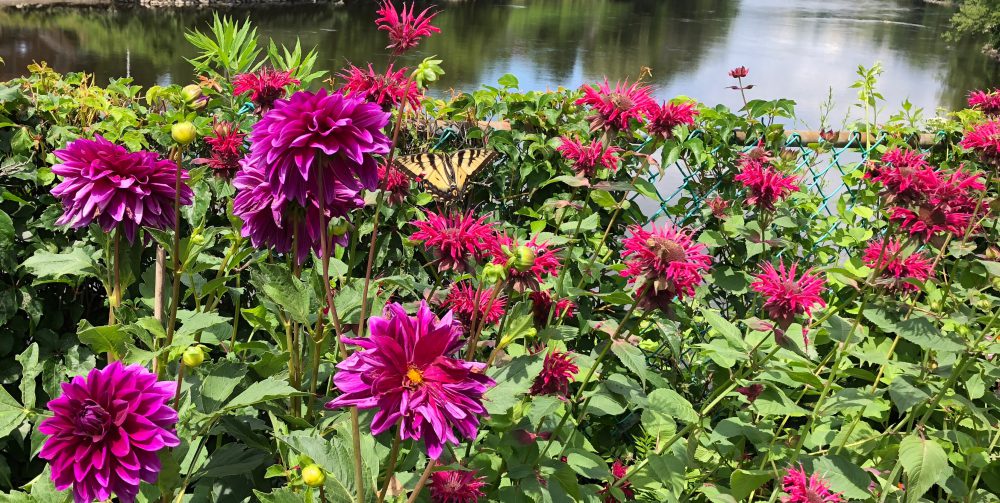
Yesterday was another cold, rainy November day. A day for the couch and repeated naps. But there I was, out and about, wearing my bright blue raincoat. First stop Starbucks where I sat in the caffeinated warmth, tapping away on my laptop, putting thoughts on screen. Then on to meet a friend for lunch. She was reluctant to go out but succumbed to my assertion that soup and baked goods would do us both good. Unfortunately, the cafe was out of soup.
“Hope is the thing with feathers that perches in the soul”—that line sang in my brain as I drove the rainy streets. Hope has been knocking on my door recently, let me in, let me in. I open the door warily and keep the chain on.
Over the past few days, I’ve been getting tweets from a conference for elementary and middle school educators–the theme of the conference is “hope.” One tweet quoted John Dewey: “Hope arouses in us the energy to change our circumstances, not to simply be optimistic or have wishful thinking that they will get better on their own…” Hmm….I need to sit with that one. Hope arouses energy—but don’t we need energy to hope?
I often use “hope” the same way I might use “wish” or “pray”—I look at tall trees swaying in strong wind at the back of the garden and say I hope they don’t get blown down and fall on my house or I write to a friend who’s been ill, I hope you get better soon. “Hope” in those statements has no agency—it’s a plea, an incantation set free.
But “hope arouses in us the energy…” asks me to think of hope as a muscle that needs exercise; an intention that requires action. Hope is not just a thing with feathers; it’s a thing with strong beating wings and heart.
Another tweet: In hopeless times, how do we foster hope in ourselves?
I think of myself as basically optimistic—and as I key that in, I immediately think “privilege,” I think “white,” “middle class,” I think back on a long history of things generally working out for me, of my sense of agency. But as I age, that optimism and belief in my ability to control and shape the future is tempered and challenged.
Where does hope fit in? What do I hope for? In hopeless times, how do we foster hope? What can I—we—do to counter hopelessness?
I’m tempted to end this with some wise or insightful statement, something forward looking. Instead, I sit with the questions. All I can offer is a circle back to the opening scene—on a dark, chilly wet day, we put on bright colors, step out the door, and connect—with our thoughts, our friends, the world around us.


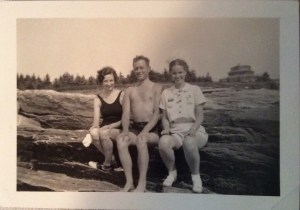 mily spent summers near Boothbay, at the end of a neighboring peninsula, and she and her siblings came regularly to Pemaquid. I have pictures of her with her brother and later with my dad and friends picnicking and playing on the rocks.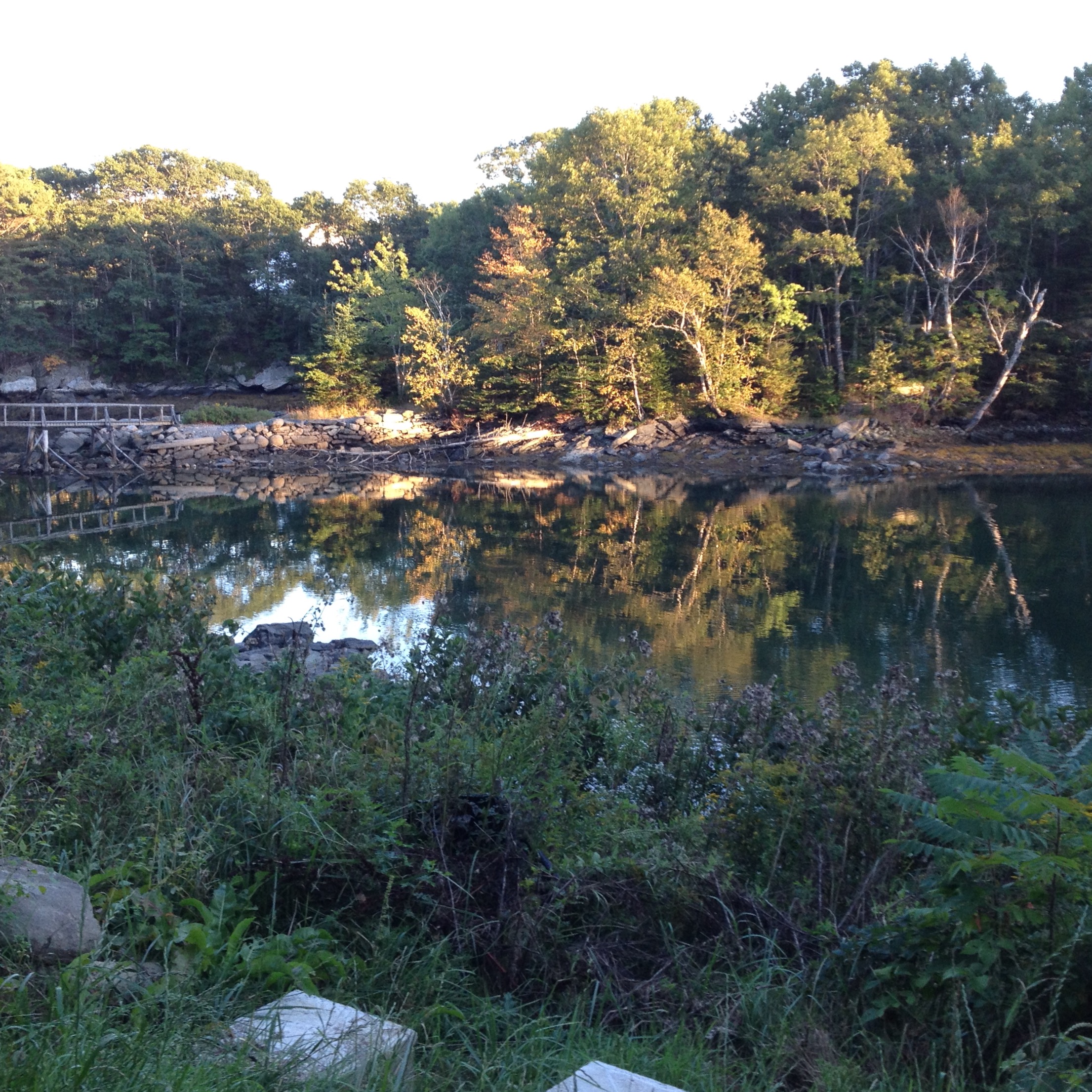
 waves and the smell of salt and seaweed. I came there one evening when I was in my 20s and caught up in some sort of tumult—there was a full moon and a high tide—magic, an easing of spirit. I came again the spring that my dad died and 10 years later, the summer my mom died, needing the touchstone of a place that has echoes back in family history, remembering childhood picnics on the rocks and imagining my parents there in their younger, newly married days
  along the front of the house. The hellebore is still covered with snow but the epimedium is uncovered–I will rake away the old foliage so the flower stalks can come up unimpeded. The boxwood near the front door is still partially buried but I can see many broken branches–it might need a radical pruning.
 with a view of the birdfeeders, gardens, and trees. Right now the view is snow, snow, and more snow.
 At Home on Harlow